Saturday, April 13, 2013

CHASTEBERRY as Herbal Medicine


Uploaded with ImageShack.us

Possibly Effective for:

Premenstrual syndrome (PMS). Taking vitex agnus-castus by mouth seems to decrease some symptoms of PMS, especially breast pain or tenderness (mastalgia), constipation, irritability, depressed mood or mood alterations, anger, and headache in some women. Vitex agnus-castus might not be effective for symptoms of bloating.
Premenstrual dysphoric disorder (PMDD), a more severe form of PMS. Vitex agnus-castus is about as effective as the prescription drug fluoxetine (Prozac) for relieving symptoms of PMDD. However, vitex agnus-castus seems to be somewhat more effective for physical symptoms such as breast tenderness, swelling, cramps, and food cravings. Fluoxetine seems to be somewhat more effective for psychological symptoms such as depression, irritability, insomnia, nervous tension, and feeling out of control.

Vitex agnus-castus is LIKELY SAFE for most people. Uncommon side effects include upset stomach, nausea, itching, rash, headaches, acne, trouble sleeping, and weight gain. Some women notice a change in menstrual flow when they start taking vitex agnus-castus.
Special Precautions & Warnings:
Pregnancy and breast-feeding: Using vitex agnus-castus during pregnancy or breast-feeding is POSSIBLY UNSAFE. The concern is that vitex agnus-castus can interfere with hormones. Don’t use vitex agnus-castus if you are pregnant or breast-feeding.

Hormone-sensitive condition such as endometriosis; uterine fibroids; or cancer of the breast, uterus, or ovaries: Vitex agnus-castus can affect hormones and might affect estrogen levels. Don’t use vitex agnus-castus if you have a hormone-sensitive condition.

In vitro fertilization: Vitex agnus-castus can interfere with the effectiveness of in vitro fertilization. Don’t use vitex agnus-castus if you are undergoing this procedure.

Saturday, March 23, 2013

Sabah Snake Grass as Herbal Medicine

 photo SabahSnakeGrassinthegarden_zps01080dfa.jpg

Sabah Snake Grass (Clinacanthus Nutans Lindau) is natural common plant and has been widely used in Malaysia and other Asia countries as traditional cure. In malay language it also known as " BELALAI GAJAH or ELEPHANT TRUNK leave.

Herbal cancer treatment : Traditional uses of SSG

Sabah Snake Grass has traditionally been used for the following health problems:

Sore throat
Uric acid
Gout
Uterine fibroid
Kidney problems
Prostate inflammation
Skin problems like eczema, shingles, and psoriasis


Herbal cancer treatment : SSG cures cancer

This is the piece of information that might save lives. Who knows. So no harm sharing here. I shall give the links to the relevant sites at the end of this article.

It was reported in another site that Sabah Snake Grass has cured so many types of cancer:

Lung cancer
Uterus cancer
Prostate cancer
Breast cancer
Leukemia
Dialysis patients

Others with high cholesterol, high blood pressure, high uric acid and diabetes have also benefitted from Sabah Snake Grass.

Two varieties of this plant

Apparently there are two varieties of this plant. The effective one is the Sabah Snake Grass (SSG). The other variety is the Indian Snake Grass (ISG). The leaves of SSG taste sweet, whereas those of ISG taste very bitter. The leaves of SSG are longer than those of ISG.

Wednesday, February 6, 2013

Wild Strawberry as Herbal Medicine

Photobucket

The herb represents a great remedy and its usage is situated somewhere between food and medicine, but it can also cause serious allergic reactions. The small yellow dots that cover the fruit (the herbs seeds) are the ones that give the herb its therapeutical power.

Uses

-liver disorders such as hepatitis, chronic hepatitis and cirrhosis
-Diabetes, goutiness, high cholesterol levels and arteriosclerosis
- Rheumatism
-skin diseases such as acne, dermatosis and psoriasis, catalyzing the healing processes.
- increase the resistance to high temperatures. It has a cooling effect and it stimulates the nervous system, acting against fatigue and asthenia that appear during hot periods.
-represents an elixir that prevents wrinkles and refreshes complexions. Mashed strawberries used for face treatments have an excellent effect even in the cases of people who have faded complexions.
- good remedy against chilblains.
-have a laxative effect healing constipation

Caution
Special attention must be directed at those who suffer form allergies, because in those cases it is best to consume small quantities of wild strawberries. The consumed quantity can be increased gradually only if there are no digestive, dermatological or respiratory problems.

Monday, January 14, 2013

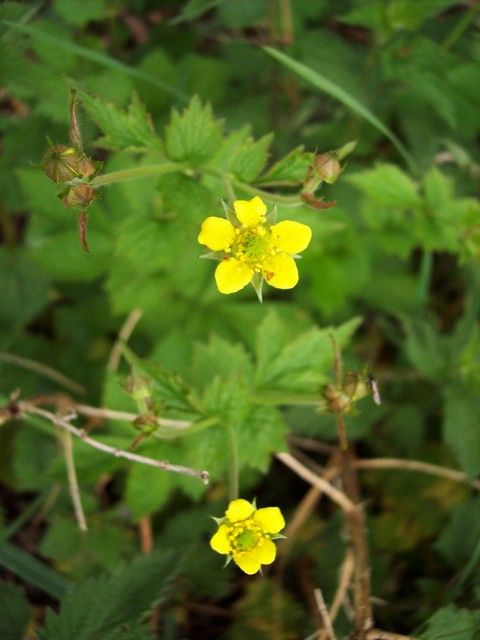
Wood Avens as Herbal Medicine

Photobucket

The rhizome (radix gei) is the only part of the herb which has medicinal usages. It has a cylindrical shape and measures about 1 inch in diameter. Due to the secretion of eugenol, a volatile chemical substance, the rhizome as well as its roots give off a pleasant clove smell. It should be noted that rhizomes and the roots are uprooted either in the springtime, before the appearance of leaves or in the fall when the cocnnetration of eugenol is higher. In November, the concentration of the active substances contained - like tannin - is the highest.

wood avens plant For therapeutic purposes, rhizomes are used in their dry form. After being uprooted, the roots are washed with cold water and are then laid in thin layers in the sunlight or in rooms without humidity with temperatures of 35 degrees Celsius. The process of drying ends as soon as the roots assimilate a ligneous appearance, easily breakable. The quantity of dry substance obtained from 2-3kg of fresh roots is about 1kg.

Proprieties and benefits of Wood Avens
Tannin (10-20%), saccharose, starch, bitetr substances and mineral salts are the predominant chemical substances contained by the herb. The presence of tannin in cerentel ensures that wood avens can effectively alleviate stomach afflictions, infectious diarrhea, liver or biliary disorders. As it was previously mentioned, wood avens also contains eugenol, a substance with multiple usages in medicine and stomatology. The herb has astringent effects (eliminates painful muscular contractions), analgesic effects (it alleviates pain), antiseptic (keeps bacteria infections away), soothing (at intestinal level) and haemostatic effects (it can stop bleedings and soothe the haemorrhoidale pain).


Treatments and mixtures


Some of wood avens's usages are as follows. Due to the fact that it is a good disinfectant, the herb is recommended in alleviating enterocolitis and menstrual pains (because of its haemostatic properties it can stop bleedings). As an astringent, the herb effectively treats diarrhea and intestinal infections. Other usages of the plant are noticeable in internal treatments: pharyngitis, amygdalitis, bronchitis, asthenia, depressions and even cancerous diseases. As an antiseptic, it is good for gargling in case of toothaches, dental abscesses, amygdalitis, stomatitis, gingivitis and plaques.

Wood avens powder
Wood avens powder. Half of spoonful of powder administrated three times a day for two weeks is the ideal treatment against pharyngitis, amygdalitis and bronchitis. In cases of intestinal infections and diarrhea, the dosage is increased to four spoonfuls of powdered root a day. Against weak states and anemia produced by bleedings, an initial dose of 2-3 spoonful of powder is administrated, after which the treatment is continued with one spoonful of powder four times a day for five straight days.

Wood avens infusion
Wood avens infusion. This mixture can successfully treat stomatitis and gingivitis if gargling is done three times a day for a period of one to two weeks. It is efficient also for depressive, melancholic states and fatigue by being administered a cup of this mixture twice a day for six weeks. After a pause of two weeks the treatment can be resumed.

wood avens By combining powdered root of wood avens with the infusion, a mixture is made that is efficient in treating cancerous disorders because it amplifies the assimilation processes and also it maintains the physical and psychic tonus. Thus, before each important meal, a cup of wood avens infusion in which half a spoon of powdered herb was dissolved is consumed.

Wood avens tincture
Wood avens tincture. Owing to its anesthetic proprieties, a wad moisted in tincture and used as a poultice can alleviate toothaches. This tincture can also be used for massages to eliminate muscular strains.

Warning
An overdose can trigger nausea states. Also it is not recommended for the products based on wood avens to be consumed between meals, because it can sometimes produce gastro-intestinal irritations. In hepatic afflictions the consumption of wood avens is not indicated.

Wood Spurge as Herbal Medicine

Photobucket

Traditionally: well developed plants in bloom were used in many villages for dying eggs, fibers and fabrics.

The wood spurge, carefully dosed by old women, experts in medicinal plants, has had many applications in medicine, both human and veterinary ones. The latex in the plant was used against infections, warts and freckles.

In the Bran area, the wood spurge was placed in the ears against tooth aches.

The floral stalks were boiled and the decoct helped wash away wounds and scabies.

The boiled plant was placed on the head, in bunches, in a cloth, against head aches.

Drink with warm water as an abstergent and, for stomach aches, take a small dose with wheat flower.

Boil it in sweet milk or water and administer against severe fever. It was also used for rheumatic pains or wounds on the ill persons' bodies. The wood spurge was boiled with water and the resulted broth was used to wash their bodies, while the spindle was used to foment them. It is no longer used as a medicinal plant, being abandoned because other plants with less powerful effects for the diseases they treat were discovered, plants that are not toxic.
Chemical composition:
- latex, gum, resin, fatty and ethereal oils, tannin, albumen, etc.

Properties of Wood spurge
Properties of Wood spurge it has effects against mycoses and is very useful in treating eczema. It can also be used for treating intestinal worms and as an external revulsive.

Toxicology! The plant is poisoning so it has to be consumed internally with a great deal of attention. It can lead to blindness and the seeds can actually kill a person.

It can be used for the following medical conditions: warts, ringworms, etc.

Usage: they used the latex, which was applied locally. It is obtained from the fresh plant.

Saffron Threads as Herbal Medicine

Photobucket

Parts Used: dried stigma (stamens) of the flower

Saffron, the worlds most expensive spice, is spice derived from the dried stigma of the flower of the saffron crocus. The use of saffron comes down to us from anitquity, and was used by ancient Greeks, Indians and Egyptian in both cooking and medicine. Traditional uses of saffron extend far beyond the kitchen. Saffron has been used to reduce fever, to regulate the menstrual cycle, to combat epilepsy and convulsions and to treat digestive disorders. The bitter glucoside picrocrocin is responsible for saffron's flavour.

Saffron yields a deep, rich yellow that has given its mark to the robes of Tibetan monks, and just a single thread can flavor a whole meal, Saffron contains more than 150 volatile and aroma-yielding compounds.

Granadilla ( Passion Flower as Herbal Medicine)

Photobucket

Parts used
Roots, bark, flowers, fruit.
Dried leaves and stems.

Uses
Skin of the fruit , bark of root, used for intestinal tapeworms and parasites.
- Decoction of root bark used for malaria, splenic enlargement, tuberculous afflictions.
Infusion of powdered flower buds prescribed for bronchitis, as a wound wash, and to expel worms.
- Fruits, powdered with the seeds, as an infusion for dyspepsia, stomach pains, dysentery, colitis, and antihelmintic.
- Used for anxiety , nervousness and insomnia.
- Used for epilepsy, neuralgia, premenstrual tension.
- Folk remedy for hyperactivity.
- Use for whooping cough, morphine addiction, insomnia, neuroses in children, teething, spasms.
- Poultice of roots applied to boils, cuts, earaches, inflammation.
- In the Americas and Europe, used traditionally as a "calming" herb for anxiety, seizures and hysteria.
- In Mauritius, used as diuretic and emetic.
- In Guiana, used as vomitive and taeniacide.
- Indigenous tribes in the Amazon have long used the leaves for its sedative and pain-relieving properties; also, as a heart tonic and for coughs.
Homeopathic medicine
- Used for treatment of insomnia, epilepsy, tetanus and muscle spasms.

Passionflower may aggravate conditions caused by excessive testosterone (baldness and prostate problems in men, unusual aggression, hair growth, and skin problems in men and women) so this should be evaluated before consuming too much Passionflower. Not for use in pregnancy, can cause uterine contractions.